
The Indian government is reportedly planning to introduce a social media code of conduct for its officers and employees. This move aims to regulate their online activities, preventing the posting of personal opinions or content that glorifies their work on platforms like X, Facebook, and Instagram, addressing the current lack of specific guidelines.

The search for N Chandrasekaran's successor as Tata Sons Chairman has reportedly narrowed to Tata Steel CEO T V Narendran, Tata Sons Executive Director Saurabh Agrawal, and NSE MD & CEO Ashish Chauhan, with Chauhan emerging as a potential 'dark horse' candidate.

The Securities and Exchange Board of India (Sebi) has introduced a comprehensive new code of conduct for its board members, significantly tightening rules on conflict of interest, disclosures, recusals, and non-permitted investments, moving from broad ethical guidelines to a more prescriptive, compliance-driven regime.

India's UPI International payment system is now playing a crucial role in humanitarian efforts, enabling seamless disaster relief donations from Indian users to Nepal's Prime Minister Disaster Relief Fund, showcasing its growing global acceptance and utility beyond tourism. UPI IMAGE: Kindly note that this image has been posted for representational purposes only. Photograph: Unsplash Key Points UPI International, initially for Indian tourists, is now facilitating disaster relief donations to Nepal's Prime Minister Disaster Relief Fund. The embassy of Nepal in India is actively encouraging Indian users to utilise their UPI apps for these contributions. This marks a significant shift, expanding UPI's cross-border use case beyond tourism to include inbound collection for foreign governments. The move positions UPI International alongside global payment giants like Alipay+ and UnionPay for international aid. Donors need to activate the UPI International feature on their apps to transact, with amounts converted from INR to NPR.
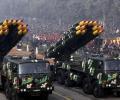
Global brokerage Jefferies forecasts a double-digit compound annual growth rate (CAGR) for India's defence spending, estimating a cumulative domestic opportunity of over $60 billion across four years, driven by geopolitical tensions and the government's indigenisation push.

Prime Minister Narendra Modi, addressing the BRICS summit, called for a fundamental shift in global governance, advocating for the replacement of the current 'pyramid of privilege' with a 'platform of partnership' where the Global South becomes a 'rule shaper' rather than a 'rule follower'.

The government's e-marketplace platform, GeM, is significantly enhancing public procurement through the integration of AI, advanced analytics, and digital monitoring systems. This strategic adoption has led to substantial savings for the exchequer and improved transparency, while also playing a crucial role in health sector procurement.

State Bank of India Chairman C S Setty stated that banks will take three to four months to deploy the significant funds mobilised through foreign currency non-resident (bank), or FCNR(B), deposits, which is unlikely to cause "abnormal lending". He also highlighted the need for agentic artificial intelligence (AI) costs to fall sharply for its widespread deployment in India, envisioning its role in transforming banking from fraud detection to personalised financial assistance.
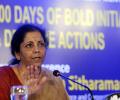
Finance Minister Nirmala Sitharaman has called for enhanced accountability and safeguards for artificial intelligence, particularly as it integrates into critical sectors like finance. Speaking at the Global Fintech Fest, she highlighted the dual nature of AI, capable of accelerating transactions but also amplifying fraud and cyberattacks. Sitharaman stressed the need for human and institutional responsibility in AI-driven decisions, urging regulators and companies to scrutinise high-risk AI applications. She also proposed a federated industry platform for Indian tech companies to navigate international regulations and ensure tax compliance globally.

The question for the next 20 years is not whether India can become a $5 trillion or $10 trillion economy. Those are attractive targets, but the real question is whether India can create enough productive jobs, educate its children properly, make its cities liveable, and give hundreds of millions of people a substantially better life, asserts Ramesh Menon.

Prime Minister Narendra Modi cautioned against the 'weaponisation' of technology and critical minerals at the BRICS summit, advocating for cooperation to foster shared prosperity. Concurrently, Chinese President Xi Jinping announced plans for an open-source AI ecosystem for BRICS nations, positioning Beijing as a key technology partner amid global AI competition.

The US push for clearer crypto rules is putting pressure on India to fill its own regulatory gap for virtual digital assets.

'Listing leads to greater transparency and shareholder oversight.'

Nepal's Hindu groups have sought an all-party discussion on restoring Hindu-nation status within three months.

A report by Bain & Company and HealthQuad identifies remote patient monitoring, OT/ICU optimisation, and chronic disease management as key opportunities for Artificial Intelligence in Indian healthcare. The report highlights a shift from experimental AI to real-world applications, driven by government initiatives, increasing EMR adoption, and a robust startup ecosystem. AI's autonomous capabilities are rapidly advancing while costs decrease, creating significant growth potential for providers and startups.

State-run Hindustan Aeronautics Limited (HAL) has delivered LCA Tejas FOC twin-seater trainers and HTT-40 basic trainer aircraft to the Indian Air Force, and Dhruv Next Generation helicopters to Pawan Hans. This significant handover, attended by Defence Minister Rajnath Singh and Civil Aviation Minister K Rammohan Naidu, underscores India's progress towards self-reliance in aerospace, strengthening both military and civil aviation capabilities with indigenous platforms.

'I thought this generation was no good, will not be able to do much with all this social media etc. But then, they surprised us.'

The Rajasthan high court, Jodhpur, has taken suo motu cognisance of issues concerning Gen Z, Gen Alpha and Gen Beta, expressing concern over junk food, excessive screen time, paper leaks, inadequate infrastructure in rural schools and the possible erosion of basic learning skills in the age of artificial intelligence.

Making UPI payments fee-based for some transactions could enhance mental reservations against digital payments -- which have largely been overcome -- once more. Do we want to regress?, asks R Jagannthan.

A 72-year-old retired nurse in Nagpur was cheated of Rs 90.65 lakh by cyber criminals who kept her under 'digital arrest' for several weeks, police said.

An independent study reveals that while Geographical Indication (GI) registration has boosted the identity of Kerala's traditional handloom products, it has not uniformly translated into economic benefits across weaving clusters. Challenges include an ageing artisan population, competition from powerloom products, rising raw material costs, and inadequate marketing.

The Pakistan Super League (PSL) is considering moving its next edition to January to avoid clashing with the Indian Premier League (IPL). Media rights holders have expressed concerns over limited advertising revenues during the current April-May window, prompting discussions within the PSL Governing Council for an earlier schedule.

Quantum computing is set to redefine artificial intelligence, cybersecurity, and scientific discovery, promising unprecedented speeds and capabilities while also necessitating urgent development of quantum-safe security measures and strategic enterprise readiness, says Sunil Varghese.
The Haldwani forest division has launched India's first AI-based forest acoustic surveillance system. This innovative technology uses AI, acoustic sensors, and long-range wireless communication to detect illegal logging, poaching, and other suspicious activities in real-time, even in remote areas. Powered by solar energy, the system provides continuous monitoring, significantly enhancing forest protection, wildlife conservation, and biodiversity monitoring efforts.

Investors opening new brokerage accounts must choose a broker suited to their style.

The National Investigation Agency (NIA) has confirmed that terror charges under the Unlawful Activities (Prevention) Act (UAPA) against seven foreign nationals, including one American and six Ukrainians, have not been dropped and the probe is ongoing. The agency filed a chargesheet under the Immigration and Foreigners Act (IFA) to prevent the accused from becoming eligible for default bail, while explicitly stating that the UAPA investigation continues. The foreign nationals were arrested for allegedly entering India illegally from Myanmar.
Prasar Bharati Chairman Prasoon Joshi voiced concerns over AI's impact on India's cultural heritage, including music and endangered languages, advocating for human-AI collaboration. Meanwhile, a Spotify report revealed significant growth in royalties for Indian artists, with linguistic diversity driving economic strength in the creative industries, highlighting the platform's role in enabling talent across various Indian languages.
Prime Minister Narendra Modi has called upon India's youth to dream big, assuring them of government support and resources, including a Rs 1 lakh crore Innovation Fund, to bolster the country's burgeoning startup ecosystem and drive its journey towards becoming a developed nation.

The Enforcement Directorate has seized Rs 3.45 crore in cash during searches against Karnataka PWD Minister Satish Jarkiholi, his family, and associates in a FEMA investigation. The probe concerns alleged undisclosed overseas investments, cross-border business links, and collection of bribes from PWD contractors, with the minister denying wrongdoing and alleging political targeting.
The third edition of the Viksit Bharat Young Leaders Dialogue (VBYLD) has commenced with a quiz contest, leading to a national finale in January 2027 where young leaders will present their ideas for a developed India to Prime Minister Narendra Modi. The multi-stage event includes essay challenges, district championships, and state-level dialogues, aiming to foster youth participation in nation-building across various thematic areas.

Xi brought in asymmetrical power play by stating that India should have 'strategic cognition' and 'strategic judgement made on the basis of the stage of development the two countries are at'. This is a very nuanced way of asserting China's coercive diplomatic posture and reflects Beijing's penchant to unleash border instability at will, restrict rare earth metal exports, exert pressure on India at global and regional orders, asserts China expert Srikanth Kondapalli.
The National Investigation Agency (NIA) has filed a chargesheet against seven foreign nationals, including a US citizen and six Ukrainians, for illegal entry and alleged terror conspiracy with ethnic armed groups, though the stringent UAPA anti-terror law was not invoked at this stage.

N Chandrasekaran's letter of not seeking a third term was written to Tata Sons directors (including to Noel Tata as a nominee director) and, therefore, Tata Trusts did not have a locus standi on accepting or rejecting that letter.
Uttar Pradesh Governor Anandiben Patel addressed AI Manthan 2.0, advocating for the comprehensive integration of Artificial Intelligence across all university subjects rather than as a standalone course. She urged universities to develop clear, time-bound AI roadmaps covering education, research, healthcare, and agriculture, emphasising indigenous AI development, employment creation, and the importance of "Safe and Trusted AI." The event also saw the formation of an AI Policy Advisory Group and an AI Implementation Group to drive these initiatives.

South African President Cyril Ramaphosa on Friday described BRICS as an important global forum, highlighting the grouping's growing demographic and economic weight and noting that its members account for around half of the world's population and 40 percent of global GDP.

Do not share OTPs, PINs, authentication codes, card numbers, card verification values (CVVs), KYC details, security answers, Internet-banking passwords or Aadhaar-based authentication credentials through SMS, e-mail or phone calls.

'Once you're wrestling with making a merger of that scale value-accretive, you're also under pressure to keep growing the balance sheet and chasing liabilities, and other things start to slip as a consequence.'

BRICS finance ministers and central bank governors have called for increased representation of emerging-market and developing economies in the IMF and World Bank, while also criticising unilateral tariffs and trade measures, as the expanded bloc aims to bolster financial cooperation amidst global fragmentation.

The CPI(M) has strongly opposed the Union government's proposal to levy charges on UPI transactions, calling it a "breach of public trust" and demanding the immediate withdrawal of the legislation. The party highlighted that the government had previously promoted UPI as a free public utility, encouraging widespread adoption, and now seeks to monetise this infrastructure. They also linked this move to a broader trend of increasing banking charges.

The Indian government has clarified that consumers will not be charged for UPI transactions, and most merchant transactions will also remain free. This comes amidst speculation following an amendment to the Payment and Settlement Systems Act, 2007. Any future merchant discount rate (MDR) would be nominal, threshold-based, and aimed at ensuring UPI's long-term sustainability and infrastructure development.
